Multiplayer Tips for Better Messcraft Gameplay
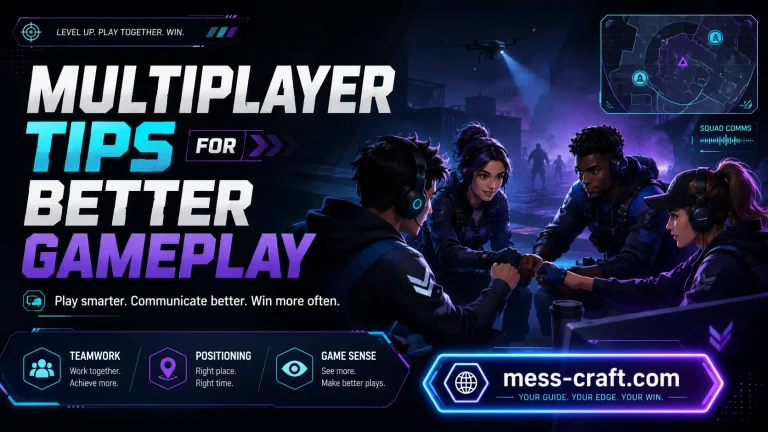
Winning in multiplayer games rarely comes down to aim, reflexes, or flashy moves alone. Those things help, but the players who consistently improve usually understand something deeper: multiplayer is about decisions, teamwork, timing, and awareness.
These Multiplayer Tips for Better Gameplay are built for players who want to stop feeling random in matches. Whether you play casually with friends or grind ranked modes, small changes in how you communicate, move, practice, and react under pressure can make every session feel cleaner and more controlled.
Winning in multiplayer games rarely comes down to aim, reflexes, or flashy moves alone. Those things help, but the players who consistently improve usually understand something deeper: multiplayer is about decisions, teamwork, timing, and awareness.
These Multiplayer Tips for Better Gameplay are built for players who want to stop feeling random in matches. Whether you play casually with friends or grind ranked modes, small changes in how you communicate, move, practice, and react under pressure can make every session feel cleaner and more controlled.
Let’s get practical.
Multiplayer Tips for Better Gameplay That Actually Matter
Most players look for mechanical shortcuts first. Better aim. Faster reactions. Stronger builds. New settings. Those can help, but they are not enough if your game sense is weak.
Better multiplayer gameplay starts with three core habits:
- Know your role.
- Communicate useful information.
- Make decisions that help the team, not just your personal score.
Once those become natural, your matches start to feel less chaotic.
Understand Your Role Before the Match Gets Messy
Every multiplayer game has roles, even if the game does not label them clearly.
In a shooter, one player may entry first, another may hold angles, and another may support with utility. In a MOBA, roles are more obvious: tank, support, carry, jungler, mage. In battle royale games, one teammate may scout, another may lead rotations, and another may focus on close-range fights.
Ask Yourself One Simple Question
Before each match, ask:
“What does my team need from me right now?”
That answer changes constantly.
Maybe your team needs damage. Maybe it needs patience. Maybe it needs someone to stop chasing kills and hold the objective. Strong multiplayer players adjust instead of forcing the same playstyle every round.
Communicate Clearly, Not Constantly
Good communication wins games. Bad communication creates noise.
The best callouts are short, specific, and useful. Instead of saying, “They’re over there,” say, “Two enemies left side near the doorway.” Instead of blaming a teammate after a mistake, give information that helps the next decision.
Useful Callouts Include:
- Enemy location
- Enemy health or status
- Cooldowns or abilities used
- Objective timers
- Your next move
- Warnings about flanks or rotations
Avoid These Communication Mistakes
Do not talk over important audio cues. Do not argue mid-fight. Do not give five instructions at once. And most importantly, do not use voice chat only to complain.
Clear comms make your team faster. Angry comms make your team worse.
Positioning Beats Panic
Many players lose fights before the fight even starts because they stand in bad places.
Good positioning means you are harder to punish and easier for your team to support. You do not always need to be aggressive. Sometimes the smartest move is holding cover, watching a flank, staying near your support, or waiting for the enemy to make the first mistake.
Strong Positioning Usually Means:
- You have cover nearby.
- You can escape if pressured.
- Your teammates can trade or support you.
- You are not exposing yourself to multiple enemies at once.
- You are close enough to help with the objective.
A simple rule: if you die and your team cannot respond, you were probably too isolated.
Play the Objective, Not Just the Scoreboard
A high kill count feels good, but multiplayer games are usually won by objectives, not ego.
Capturing zones, defending payloads, controlling vision, securing resources, reviving teammates, denying space, and managing timers often matter more than chasing one extra elimination.
Scoreboard Traps to Avoid
Some players look useful because they have strong numbers, but their impact is low. They get kills far away from the objective. They deal damage but never finish fights. They survive too long because they never take necessary risks.
A better question than “Am I top of the scoreboard?” is:
“Did my choices help us win the match?”
That mindset separates smart players from stat hunters.
Learn Timing: The Hidden Skill in Multiplayer Games
Timing is one of the most underrated multiplayer skills.
Pushing too early gets you deleted. Pushing too late leaves your teammate alone. Using an ultimate, special move, or power play at the wrong time can waste an entire round.
Good Timing Looks Like This
You wait for your teammate to be ready before engaging.
You attack when the enemy has used key abilities.
You rotate before the zone or objective forces everyone to move.
You reload, heal, or reset before the next fight starts.
The best players are not always faster. They are better at knowing when to act.
Build Better Map Awareness
Map awareness is your ability to understand what is happening beyond what is directly in front of you.
This includes enemy movement, teammate positions, objective status, safe zones, spawn points, and likely rotations.
How to Improve Map Awareness
Glance at the minimap regularly if your game has one. Notice where your teammates are looking. Track where enemies were last seen. Pay attention to sound cues. Learn common paths, hiding spots, choke points, and high-ground areas.
You do not need perfect information. You need enough information to make better decisions than the opponent.
Practice With a Purpose
Playing more is not the same as improving.
If you play ten matches while repeating the same mistakes, you are just making those habits stronger. Focused practice is different. It gives each session a purpose.
Try This Simple Practice Framework
Pick one skill per session.
For example:
- Today, focus on better positioning.
- Tomorrow, focus on cleaner callouts.
- Next session, focus on not taking isolated fights.
- Another day, review why you died in each match.
Small targeted improvements stack faster than random grinding.
Review Your Mistakes Without Beating Yourself Up
Every player makes bad decisions. The difference is whether you learn from them.
After a match, do not just think, “My team was bad.” Sometimes that is true, but it is not useful. Look for the part you controlled.
Ask:
- Did I overextend?
- Did I ignore the objective?
- Did I communicate clearly?
- Did I fight without backup?
- Did I waste an ability or resource?
- Did I repeat the same mistake more than once?
This kind of review builds self-awareness, and self-awareness is what turns average players into consistent ones.
Control Tilt Before It Controls You
Tilt is when frustration starts making decisions for you.
You rush fights. You blame teammates. You stop thinking. You chase revenge. You play faster, but not smarter.
How to Reset During a Bad Match
Take one slow breath after dying. Mute toxic players quickly. Focus on the next useful action. Play safer for one round. Stop trying to “make up” for a mistake with a desperate hero play.
A calm player with decent mechanics usually beats a tilted player with great mechanics.
Choose Teammates and Modes That Match Your Goals
If your goal is casual fun, play with people who keep the mood light. If your goal is ranked improvement, play with teammates who communicate, review mistakes, and stay composed.
Not every lobby is good for growth. Not every friend group is good for competitive improvement. That does not mean you need to take every game seriously. It means your environment should match your goal.
For better gameplay, choose the mode, team, and mindset that fit what you are trying to get out of the session.
Conclusion
Better multiplayer gameplay is not about becoming perfect overnight. It is about making smarter choices more often.
Communicate clearly. Learn your role. Position with purpose. Play the objective. Review your mistakes. Stay calm when the match gets messy.
Do those things consistently, and you will not just play better. You will become the kind of teammate other players want on their side.
FAQ Section
What is the best way to improve in multiplayer games?
Focus on one skill at a time. Positioning, communication, objective play, and decision-making usually create faster improvement than only practicing mechanics.
How do I become a better teammate in multiplayer games?
Give useful callouts, support team decisions, avoid blaming, and play around objectives. A good teammate makes the match easier for everyone.
Why do I keep losing even with good stats?
Strong stats do not always mean strong impact. You may be getting kills away from objectives, taking bad fights, or failing to support key team moments.
How can I improve communication in online games?
Keep callouts short and specific. Share enemy locations, objective information, ability usage, and your next move. Avoid arguing during active gameplay.
Is aim more important than strategy?
Aim helps, especially in shooters, but strategy decides many matches. Positioning, timing, teamwork, and awareness often matter just as much as mechanics.
How do I stop getting tilted in multiplayer games?
Pause after mistakes, mute toxic players, focus on the next decision, and avoid revenge plays. Staying calm keeps your decision-making sharp.