How Mining System Works in Messcraft: Full Guide
Mining is one of the first things players try in Messcraft, but it is also one of the easiest systems to misunderstand. You break a few blocks, find stone, maybe discover coal or iron, and suddenly the game opens up: better tools, stronger gear, deeper caves, and more useful crafting options.
MessCraft is commonly presented as a browser-based way to play Minecraft-style gameplay, including mining, crafting, building, survival, singleplayer, and multiplayer modes. The official MessCraft page describes it as real Minecraft playable in a regular browser, with support for multiple versions such as 1.5.2, 1.8.8, and 1.12.2. Other listings describe it as a Minecraft-like browser experience where players can mine, craft, build, and survive without a download.
So, how mining system works in Messcraft is mostly about understanding block breaking, tool tiers, resource depth, cave exploration, and safe mining habits. Once you understand those basics, mining becomes less random and much more rewarding.
How Mining System Works in Messcraft
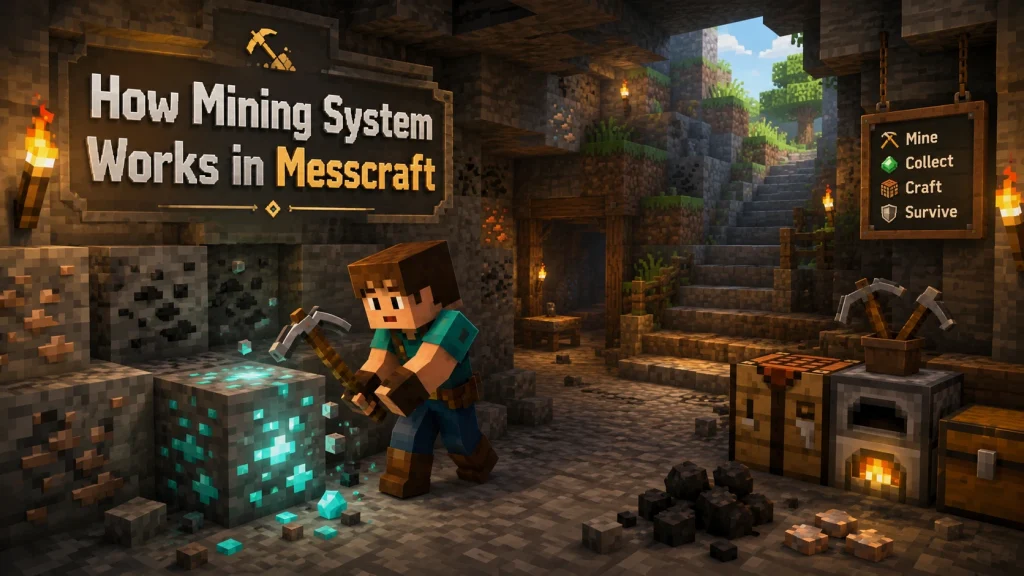
The mining system in Messcraft works around a simple loop: break blocks, collect resources, craft better tools, go deeper, and unlock stronger materials. At first, you can only gather basic blocks quickly. As you craft stronger pickaxes, you can mine tougher ores and explore more dangerous underground areas.
In simple terms, mining has five parts:
- Finding mineable blocks
- Using the right tool
- Breaking blocks long enough to collect drops
- Managing durability and inventory
- Turning mined resources into upgrades
The system rewards preparation. A player who goes underground with torches, food, spare tools, and a clear path back will usually progress faster than someone digging randomly.
What You Can Mine in Messcraft
Because Messcraft is tied closely to Minecraft-style gameplay, mining focuses on familiar block types: stone, coal, iron, redstone, gold, lapis, diamond, and other underground resources depending on the version being played. Public MessCraft project information also mentions caves, ravines, mineshafts, dungeons, villages, biomes, Nether, and End availability, which means mining can connect directly to exploration and progression.
Basic Blocks
Early mining usually starts with:
- Dirt
- Gravel
- Stone
- Cobblestone
- Coal ore
Stone and cobblestone matter because they help you craft stronger stone tools. Coal matters because it lets you make torches and fuel furnaces.
Mid-Game Resources
After basic tools, players usually look for:
- Iron
- Redstone
- Gold
- Lapis lazuli
Iron is especially important. It helps you craft stronger pickaxes, armor, buckets, shears, and other useful survival items. Redstone is more technical, but it becomes valuable if you want mechanisms, traps, doors, or automated builds.
High-Value Ores
The most exciting mining targets are usually rare ores like diamond. These are harder to find and often appear deeper underground. The Minecraft Wiki’s mining tutorial notes that mining is central to player progress and that lower layers are commonly used for finding valuable ores, though ideal levels can vary by version.
For Messcraft players, the exact best depth may depend on which version or server setup you are playing. That is why the best practical advice is: learn your version, pay attention to where ores appear, and build your mining plan around that.
Tool Tiers: Why Pickaxe Choice Matters
Not every tool mines every block properly. This is where many beginners lose resources.
A pickaxe does two things:
- It breaks stone-type blocks faster.
- It determines whether certain ores actually drop usable items.
For example, using the wrong tool on valuable ore can waste the block. In Minecraft-style mining, stronger materials usually require stronger pickaxes. A wooden pickaxe may work for stone, but iron and diamond progression requires upgrades.
Common Pickaxe Progression
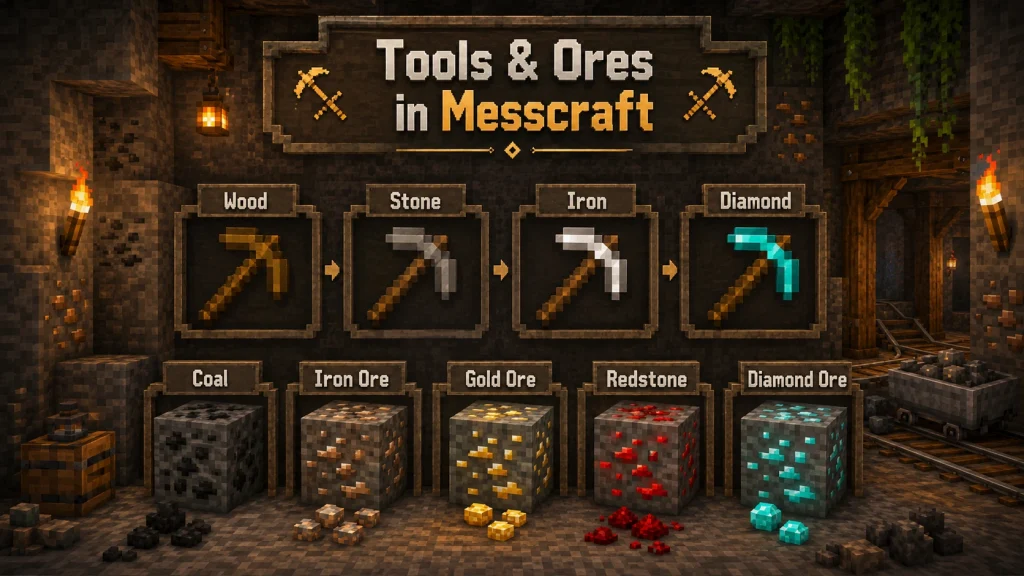
A smart mining path usually looks like this:
Wooden pickaxe → Stone pickaxe → Iron pickaxe → Diamond pickaxe
You do not need to use your best pickaxe on every block. Use lower-tier tools for common stone and save stronger pickaxes for valuable ores. This keeps your good tools from breaking too quickly.
Mining Methods That Actually Work
Random digging can work, but it is inefficient. A better mining system uses patterns.
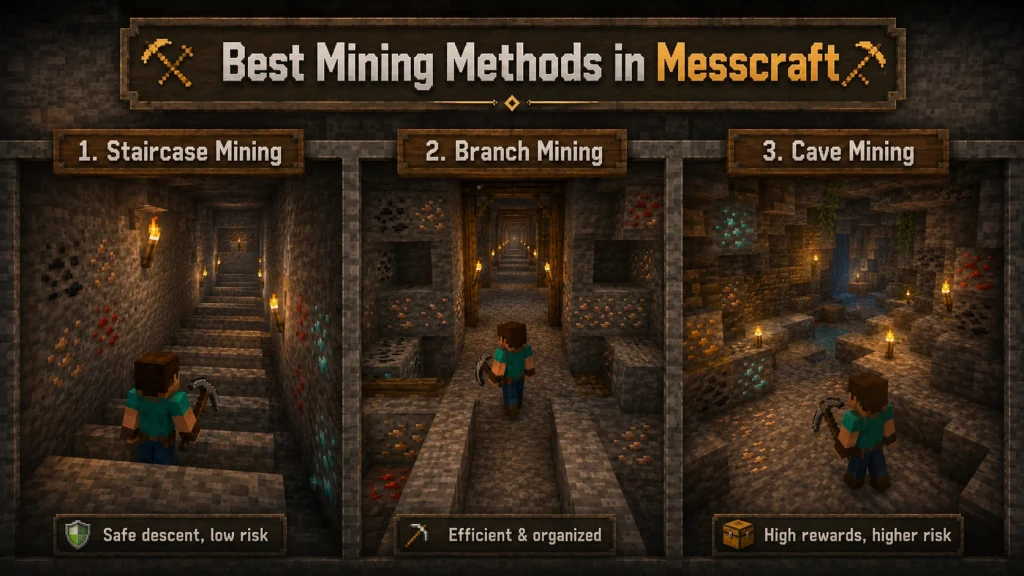
1. Staircase Mining
Staircase mining means digging downward in steps instead of straight down. This is safer because you can see what is ahead and avoid falling into lava, caves, or deep holes.
Best for: beginners, survival players, safe exploration.
2. Branch Mining
Branch mining uses a main tunnel with smaller side tunnels. It helps expose more blocks while keeping your path organized. Minecraft 101 describes branch-style tunnel layouts as an efficient way to search for ores while managing hazards like lava and caves.
Best for: finding ores efficiently.
3. Cave Mining
Cave mining means exploring natural caves instead of digging every tunnel yourself. This can be faster because ores are already exposed along cave walls. The downside is danger: mobs, drops, lava, and getting lost.
Best for: experienced players with weapons, armor, torches, and food.
4. Strip Mining
Strip mining removes large areas of blocks. It can reveal many resources, but it takes more time and tools. It is useful when you need a lot of stone or want to clear a large underground space.
Best for: bulk resources and base building.
Safety Rules for Mining in Messcraft
Mining is not only about finding ores. It is also about coming back alive with your inventory.
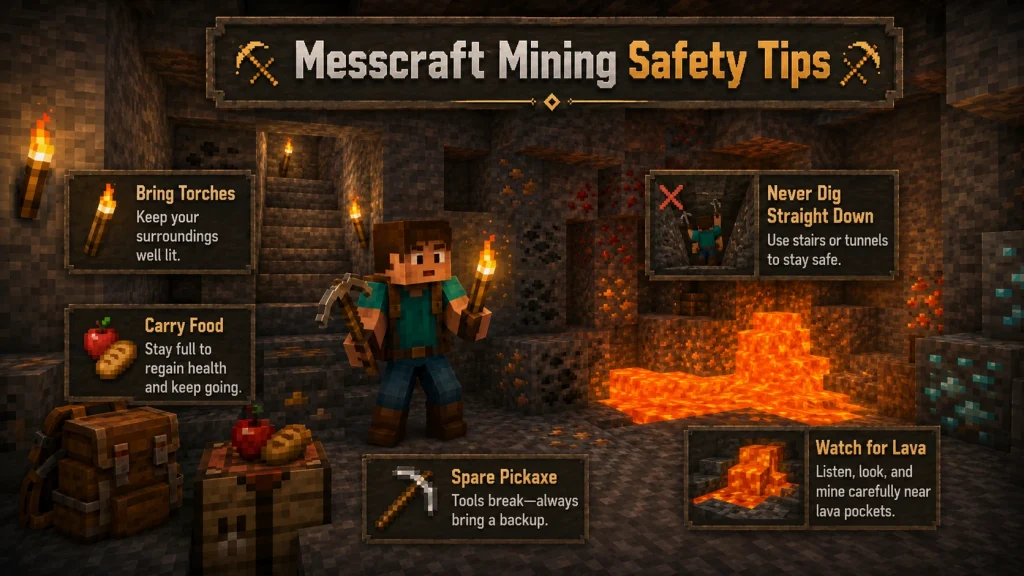
Never Dig Straight Down
This is the classic rule for a reason. Digging straight down can drop you into lava, a ravine, or a mob-filled cave. Always dig in steps or use a two-block method where you stand on one block and mine the other.
Bring Torches
Torches help you see and reduce mob spawning in dark areas. They also work as markers. Place torches on one side of your tunnel, such as always on the right wall, so you can follow them back.
Carry Food and Spare Tools
A mining trip can last longer than expected. Bring food, extra pickaxes, and blocks for bridging or blocking danger. A furnace and crafting table can also help if you want to smelt iron underground.
Watch for Lava
Lava is one of the biggest mining threats. When mining deep, move slowly and listen for sounds. Keep blocks ready so you can quickly stop lava flow.
How Mining Supports Crafting and Progression
Mining is not separate from the rest of Messcraft. It powers almost everything.
Coal gives you light and fuel. Iron gives you better equipment. Redstone opens technical building options. Diamonds unlock high-tier tools and armor. Even common stone matters because it supports building, furnaces, and large survival projects.
This is why mining is not just “khud say dhond kay lekhna” or wandering around hoping to find something useful. A good mining strategy is intentional. You choose your tools, pick a method, manage risk, and mine with a goal.
Best Beginner Mining Setup
Before going underground, prepare this simple kit:
- 2–3 pickaxes
- 1 sword
- Food
- Torches
- Crafting table
- Furnace
- Extra wood
- A few blocks for emergency sealing or bridging
This setup is enough for most early mining trips. Once you find iron, upgrade quickly. Iron tools make mining smoother and let you collect more valuable ores.
Common Mining Mistakes to Avoid
Using the Wrong Pickaxe
Do not mine valuable ore with a weak tool. You may lose the drop.
Going Too Deep Too Early
Deep mining can be rewarding, but it is dangerous without armor, food, and torches.
Ignoring Inventory Space
Mining fills inventory fast. Drop junk blocks when needed, but keep essentials like coal, iron, redstone, and diamonds.
Getting Lost Underground
Use signs, torches, blocks, or simple tunnel patterns. A messy cave system can waste more time than the mining itself.
Conclusion
The mining system in Messcraft is easy to start but much richer once you understand how tools, ores, depth, safety, and crafting connect. Better mining is not about digging endlessly. It is about planning your route, using the right pickaxe, staying safe, and turning resources into real progress.
Learn the basics, mine with purpose, and every underground trip becomes more valuable.