
How to Avoid Mobs and Stay Safe in Crowds Messcraft
Crowds can shift quickly. A peaceful event, busy market, sports celebration, protest, or public gathering can become unsafe when panic, aggression, blocked exits, or crowd pressure starts building.
Learning how to avoid mobs and stay safe is not about being paranoid. It is about staying aware, making early decisions, and knowing how to leave before a situation traps you. Most safety comes from what you do before danger becomes obvious.
How to Avoid Mobs and Stay Safe Before Trouble Starts
The safest place to be during a mob situation is somewhere else. Your first goal is prevention: avoid getting caught in a crowd that is becoming emotional, compressed, or unpredictable.
Mass gatherings can strain safety resources, especially when large numbers of people gather in one location for a shared purpose. Ready.gov notes that events such as concerts, parades, festivals, and sports gatherings can become harder to manage when crowds are dense or conditions change suddenly.
Check the area before you go
Before attending any crowded place, ask a few simple questions:
Is the area known for unrest today?
Are roads likely to be blocked?
Are there multiple exits?
Is the event organized or spontaneous?
Will alcohol, politics, sports rivalry, or strong emotions be involved?
You do not need to overthink it. Just build a quick mental map. Know where you entered, where the side streets are, and which direction leads away from the crowd.
Avoid the center of dense crowds
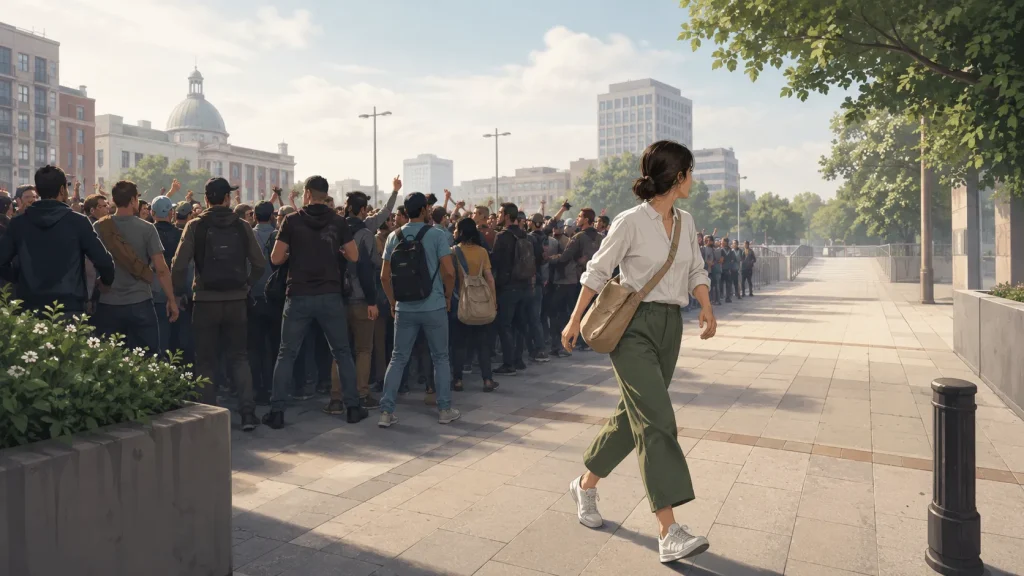
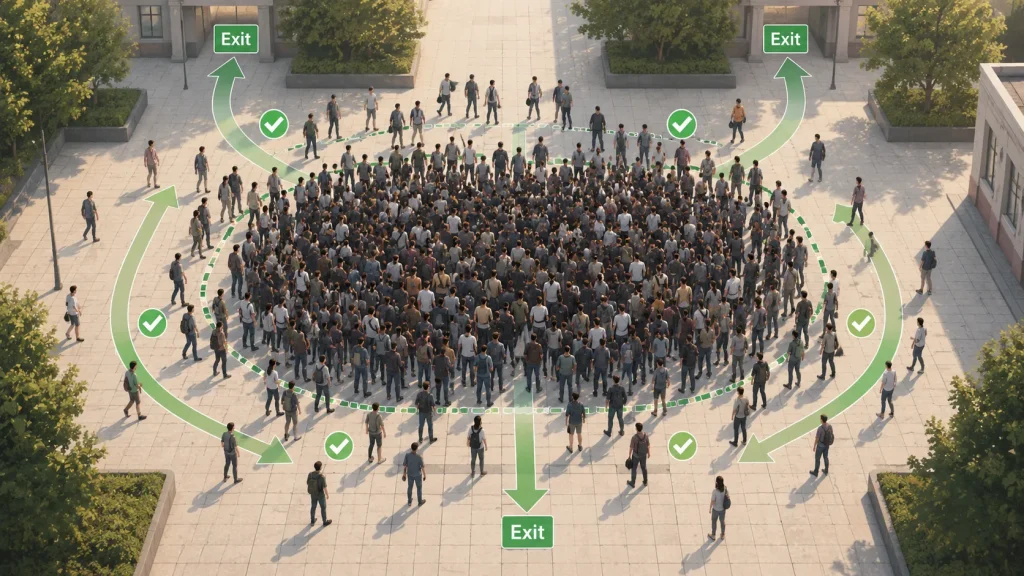
The center feels exciting, but it is usually the hardest place to escape from. If the crowd tightens, you may lose control over your movement. Stay near edges, open spaces, walls with exits, or wider streets.
CDC guidance on mass gatherings highlights risks such as environmental hazards, challenging security situations, and stampedes in crowded settings.
Watch the mood, not just the noise
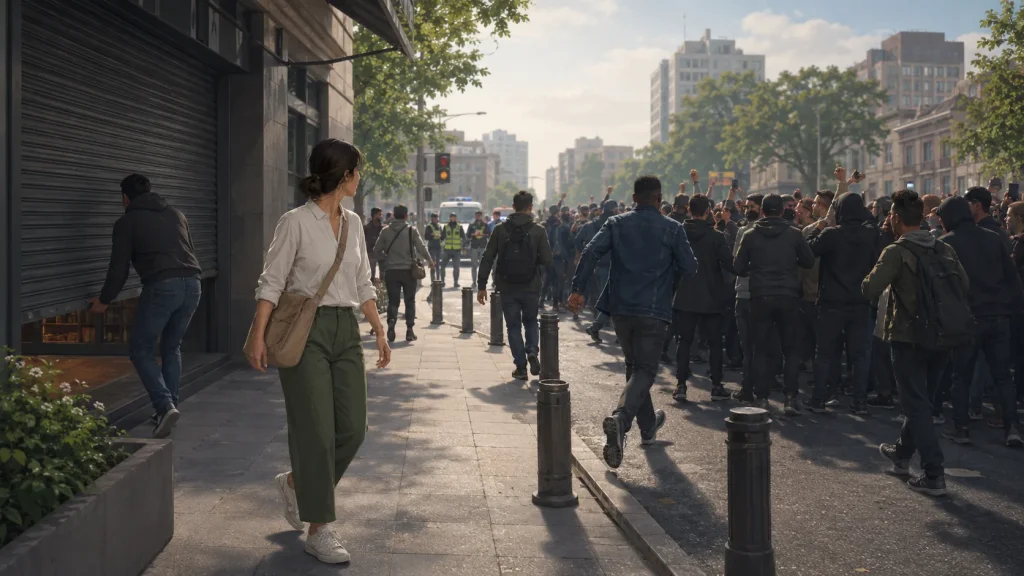
Noise alone does not mean danger. The real warning signs are changes in behavior:
People suddenly running
Objects being thrown
Aggressive chanting near a small target
Police or security moving into formation
Shop shutters closing quickly
Families leaving fast
People climbing barriers or vehicles
Crowd movement becoming wave-like or uncontrolled
When you see these signs, do not wait to “see what happens.” Leave early and calmly.
What to Do If You See a Mob Forming
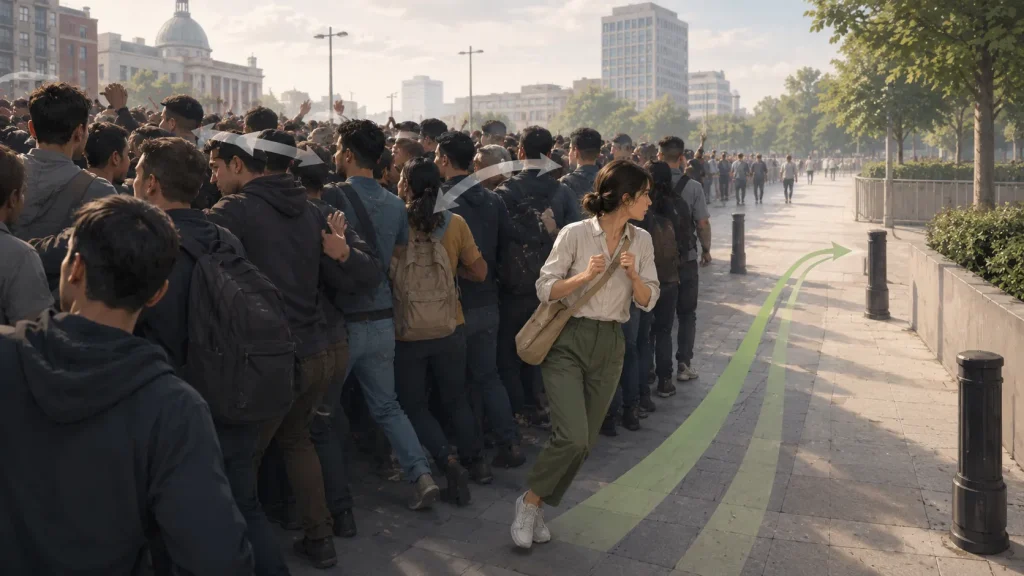
If you notice a mob forming nearby, your best move is quiet distance. Do not argue, film closely, challenge people, or try to push through the most emotional part of the crowd.
Move away at an angle
Do not run straight through the crowd unless there is immediate danger behind you. Move diagonally toward the edge. This helps you avoid pushing against the main flow while still getting out.
Keep your arms close but not pinned. If the crowd is tight, bend your elbows and keep your hands near your chest to protect your breathing space.
Do not draw attention to yourself
Avoid eye contact with aggressive individuals. Do not shout back. Do not wear or display symbols, slogans, flags, or clothing that could make people see you as part of an opposing side.
Your goal is not to win an argument. Your goal is to leave.
Stay off the ground
Falls are dangerous in dense crowds. Wear shoes you can move in. Avoid loose clothing that can catch on barriers, bikes, or other people. If you drop something, let it go unless the area is calm enough to retrieve it safely.
If You Are Trapped in a Moving Crowd
Sometimes the crowd moves before you can leave. In that case, do not fight the entire mass of people. Fighting the flow can exhaust you and increase your chance of falling.
Move with the flow, then angle out
Let the crowd carry you briefly while you look for openings. Move sideways or diagonally when gaps appear. Avoid narrow doorways, fences, dead ends, and walls where pressure can build.
Protect your chest and breathing
Crowd crush danger comes from pressure, not just trampling. Keep your hands up near your chest, elbows bent. This creates a small buffer so your lungs can expand.
If you are with someone, do not link arms tightly in a way that could pull either of you down. Stay close, communicate clearly, and agree on a meeting point before attending crowded events.
Avoid bottlenecks
Bottlenecks happen at gates, stairs, subway entrances, narrow streets, and blocked exits. OSHA’s crowd management guidance for large retail events emphasizes advance planning, trained personnel, and emergency management because crowding around entrances and exits can create injury risks.
If one exit is packed, look for another. People often rush toward the most familiar exit, not the safest one.
What Not to Do Around Mobs
Some actions feel natural but can make things worse.
Do not stop in the middle of a moving crowd to record video.
Do not push back against a surge unless you must protect your balance.
Do not insult, challenge, or debate angry people.
Do not follow the crowd out of curiosity.
Do not assume police, security, or event staff can reach you quickly.
Do not separate from children, elderly relatives, or vulnerable companions.
If you are responsible for others, leave earlier than you would alone. Children and older adults have less ability to withstand crowd pressure, heat, confusion, and long walking distances.
How to Prepare for Crowded Places
Preparation should be simple. You are not packing for a disaster; you are reducing avoidable risk.
Charge your phone before leaving.
Carry a small amount of cash.
Share your location with someone you trust.
Pick a meeting point away from the main crowd.
Wear practical shoes.
Keep ID with you.
Avoid carrying large bags.
Know the local emergency number.
For public safety threats, CISA recommends personal preparedness at mass gatherings, including awareness of surroundings and knowing how to respond if conditions change.
If Violence Breaks Out
If violence starts, leave immediately. Do not try to identify who is right, who started it, or whether it will calm down.
Move behind solid cover if needed, such as a building corner, concrete barrier, or parked vehicle. Avoid glass storefronts, temporary fences, and lightweight structures.
If law enforcement gives instructions, follow them calmly. In active threat situations, Ready.gov advises keeping hands visible and empty and following law enforcement directions when evacuating.
Conclusion
Knowing how to avoid mobs and stay safe comes down to early awareness, smart positioning, and calm movement. Leave before the crowd turns unstable. Stay near exits. Avoid the center. Protect your breathing space if trapped. Most importantly, do not let curiosity keep you near danger.
Your safety is worth more than a video, an argument, or a better view.
FAQ Section
What is the safest way to leave a mob?
Move calmly toward the edge at a diagonal angle. Avoid pushing against the main flow unless you have no choice.
Should I run if a crowd becomes dangerous?
Run only if there is clear immediate danger and open space ahead. In dense crowds, running can cause falls and panic.
Where should I stand in a large crowd?
Stay near the outer edges, open areas, or visible exits. Avoid the center, barriers, narrow gates, and dead ends.
What should I do if I fall in a crowd?
Try to get up immediately. If you cannot, curl on your side, protect your head, and keep space around your chest if possible.
Is filming a mob dangerous?
Yes, it can be. Filming may distract you, slow your escape, or draw unwanted attention from emotional or aggressive people.